
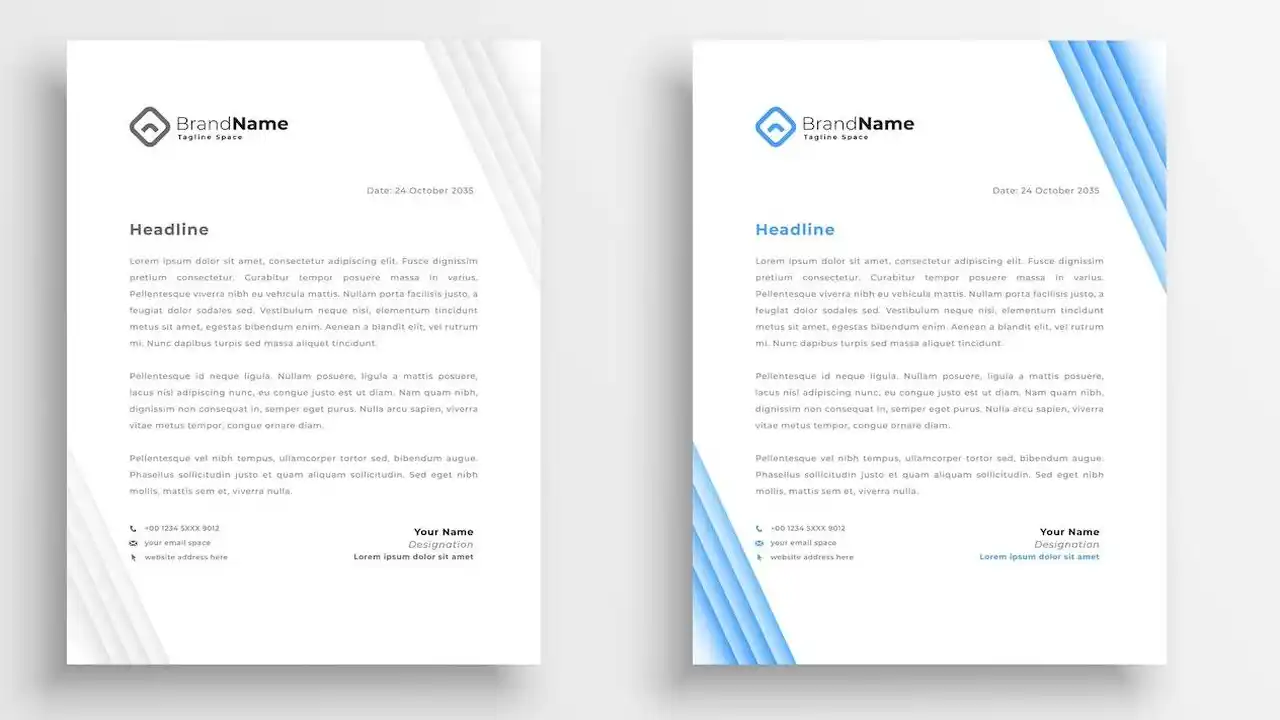
How well the letter works as a whole greatly depends on how the main parts of a business letter presents. A good business letter usually presents the main parts of the letter in a well-formatted and well-written manner, making its point clear. It is make up of different parts, and the right order of those parts is what gives the whole thing meaning. A business letter’s structure is how all of its parts fit together in the right order. The structure of business letter will be covered in-depth in this article, along with some examples for your convenience.
Business Letter Structure: In this lesson, you will learn about the parts of a business letter, as well as how it is put together and how to use a business letter template. In the table below, you can see all 12 parts of a business letter. How a letter looks on the outside has a lot to do with whether or not the person who gets it reads it. The tone and style of a letter often say something about the person who wrote it and the people they hang out with. The structure of business letter is how the parts are put together.
Top 10 – Structure of Business Letter
Most business letters follow a standard format, which we’ll go over in the next few paragraphs. Use cliches and standard phrases in your formal letter writing to show good manners, respect for the recipient, and that you have a good education. Don’t feel bad about using cliches and overused phrases. This is the standard format for business letters, and you should use it in all of them to show that you know what you’re talking about and are a professional. Read on to learn more about structure of business letter and become the subject matter expert on it.
Salutation
Usually, people start a formal greeting with the word “Dear”, followed by the person’s title and last name, and then they finish the greeting with a colon. To do this, you must first find out if the person is a man, a woman, or a doctor.
Replacing the title with the person’s first name, using impersonal phrases like “Mr. or Ms.” or “To Whom It May Concern,” or not using a salutation at all are all ways to avoid the issue, but they also show that the writer doesn’t know the recipient personally and turn the letter into a “form letter,” which is much less formal.
Identification Marks
In the left margin, one or two spaces below the signer’s name, the typist puts markings that identify themselves. So that they are easy to find, we place these labels in the far left margin. Most of the time, the officer who dictated the letter writes his or her initials at the top of the document.
If Mr. John were to dictate a letter to Mr. Michel, who would then type it, he could use any of the following distinguishing marks: LG also uses TRM, which is not the same as TRM: MR.
Inside Address
After the date and two spaces, write the full name and business address of the person who will receive the letter. If the letter is going to more than one person, you must list all of their names and addresses. The address on the letter and the address on the envelope must match.
If you give wrong information, like the wrong date, it could be against the law. In everyday life, people expect their mail to be sent to the address on the envelope. The person who got the letter could say it send to the wrong address if it doesn’t have all of the required information or if the information it does have is wrong.
Attention Line
The attention line or the phrase “for the attention of” are used when the writer of a letter to a company or organization wants to bring the contents of the letter to the attention of a specific person or official at the company or organization. The attention line usually goes two spaces after the inner address and two spaces before the salutation. As a matter of practice, the attention line is often brought up.
Reference
For a business letter to be effective today, it needs at least one reference. In an emergency, both the sender and the receiver will be able to find the reference number quickly. On the letterhead, you should write both your own reference number and the reference number of the person who sent you the letter. Some letterheads have two lines for references.
Heading
Most structure of business letter use letterheads with the name and address of the company printed on them. The company’s name, address, phone number, telegraphic address, website, symbols, and trademarks are all on the letterhead. Additionally, the name and address of the sender go in the upper left corner of the page, and any other information goes in the margins. The letterhead shouldn’t take up more than a fifth of the page if you want your letter to look balanced.
Signature
There is space for a handwritten signature right below the end of the letter. This four-line space starts with the sender’s full name and continues with the full business title, which often includes the department or division.
When someone signs his or her name at the bottom of a business letter, it shows that he or she is willing to be held to any promises or duties made in the letter. Even if the sender and the recipient already know each other, they still need to sign their full names.
Body
The structure of business letter have a body. The information or message that needs to send contains in this, the most important part of the letter. It must be easy to understand and follow a logical flow of ideas. Someone is thinking about “Your Attitude”, and they need to make this point clear.
Subject
The subject line of an email should quickly and clearly tell the recipient what the email is about. Usually, Subject, Sub, or Re comes before it, but it can also use by itself. (Re is a Latin preposition that means “in the matter of” or “in the case of.” This is not a short form of an English word.
It is common to put two spaces between this line and the first line of the letter’s body. You can put the greeting after this line. On the other hand, some businesses like to put the subject line after the “to” line but before the “from” line.
Complimentary Close
The complementary closure or subscription is the right way to end a letter. It’s kind of like how we say “goodbye” at the end of a conversation. It should be on the left and right sides of the letter, two spaces below the last line.
Sincerely Yours, Yours Faithfully, Yours Truly, Yours Very Truly, Yours Respectfully, Yours Sincerely, Yours Sincerely, and so on are all examples of closings that go well with each other. Also, there are different ways to say “Yours truly,” “Yours very sincerely,” and “Yours truly” in these phrases. “Respectfully Yours,” “Sincerely Yours,” and “Yours Truly” are a few more.
Frequently Asked Questions
Why is it Important to Follow a Format?
A well-formatted letter makes the person reading it feel professional right away. This is especially true if the letter is printed on good paper and folded in a neat way. Even before the person reads the letter’s body, he can tell that you thought about and worked hard on it.
What are the Essential Structure of Business Letter?
The heading is a part of any structure of business letter. The date is on the very last line of the main body, and my return address is in the heading. The location of the person you want to send it to. This is the address where you should send a letter. First Speech on How People Are Made. In other words, the last part of the presentation. Line Contracts’ Official Seal of Approval. Block.
Why is it Important to Follow a Format?
A well-formatted document is clear and the same all the way through. It is also correct (in that it adheres to any specified criteria).
Formatting is important for every piece of writing or documentation you make, because how a document looks can affect how the reader understands what it says.
Conclusion
To get through this part, you’ll need to know the basics of letter writing. An old German proverb says that it’s important to get off to a good start. It’s also helpful for writing business letters. Your paper’s first paragraph needs to be interesting enough to grab the reader’s attention. This article will go into the structure of business letter in detail and provide some examples for your convenience. Read more about the characteristics of business letter to broaden your knowledge base.