
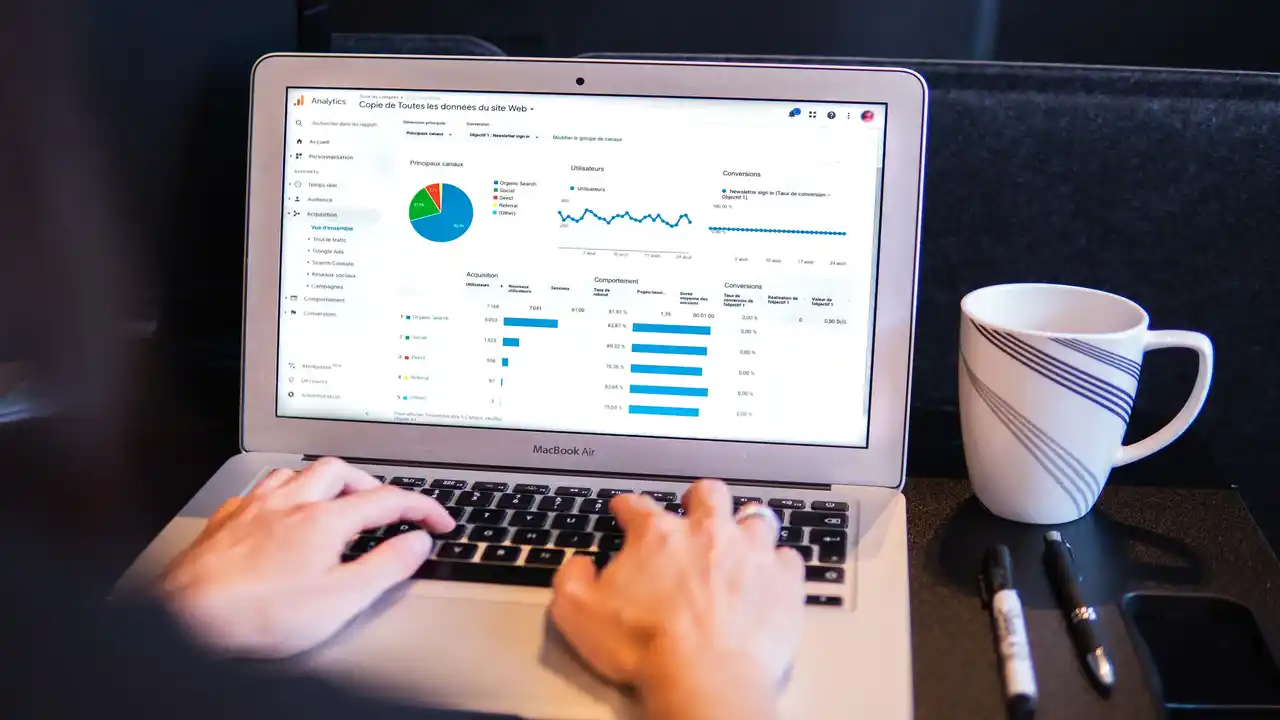
The tools for business analytics were very complicated and took a long time to set up, especially in the IT department. The amount of time it took IT to find data trends for business users went up by a lot. In the last few years, the field of business analytics has grown, and there are now many automated, self-service software solutions. To learn more, take a look at these components of business analytics.
In the data-driven world of today, businesses can’t work without data analytics. For data analysis, analytics-based performance management is a must. People use L, AI, and web-based exploits. DA looks at databases used by businesses. We’ll talk about how to look at data in this blog post.
Top 10 – Components of Business Analytics
Although the terms are frequently used interchangeably, business analytics also encompasses business intelligence (BI). Business intelligence (BI) enables organizations to reflect back on their data and better understand what is happening in the present by using descriptive analytics, data collecting, storage, knowledge management, and data analysis. Business analytics looks to the future, whereas business intelligence (BI) is based on historical data. Using data mining, modeling, and machine learning, you can figure out why something happened and what will happen in the future. This topic outlines components of business analytics that will assist you to achieve desired goals in your life.
Data Standards
Making sure that data is of high quality and that regulations follow requires the importance of data governance and standards. Implementing data governance and standards is important because it improves data management, data structures, data stewardship, and external audits and compliance checks.
Optimization
This components of business analytics help to provide a detailed summary of historical data, which helps to identify trends and patterns in the data. Business analytics is a tool that helps with optimization. Businesses can run more smoothly when they use analytics.
When demand goes up all of a sudden, they can increase production. When there is a lot of demand or not enough supply, they can set prices that are still competitive. Business analytics can lead to sales, specials, and discounts, among other things.
Online Analytical Processing
This is a method that is used by almost all BI tools. It can find data, give reports, do complex analytics calculations, and plan for “what if” scenarios. OLAP uses data from a company to do complex calculations, look for trends, and model data by looking at it in more than one way. Users of OLAP can look at data from different angles to make better decisions. Data analysis is something that businesses do all the time. For analysis, they need all the data to be in one place.
Data Aggregation
One place does most of the data sorting, leaving only usable information. It looks for and removes duplicate information. This data comes from a number of different places. A form is not required. Gathering information about consumers uses their digital and physical forms.
Either straight or roundabout. It is also helpful to know about traction. Companies work together to share information about shipments, sales, and finances. This components of business analytics involve the use of statistical methods to analyze and interpret data, which helps to provide insights into business operations.
Corporate Performance
Corporate Performance Management (CPM) is a way to keep track of and control how well a company is doing. It uses indicators, actions, and systems to do this. Furthermore, by using targeted data, CPM software can create operational strategies that enable business leaders to plan and make predictions for finance, sales, marketing, human resources, operations, and other areas.
Ensuring the integration of a company’s goals, plans, and actions increases the likelihood of success and growth. Therefore, if an organization aims to change its budget, save money, improve its strategy, better align its key performance indicators, and plan its finances more effectively, CPM should be an essential component of its business intelligence infrastructure.
Data Security
As global security threats rise, it is becoming increasingly important to monitor and detect harmful behavior on corporate networks. Furthermore, with the help of new technologies that use correlation algorithms, security analytics can effectively identify anomalies in large amounts of data.
Additionally, by sounding multiple alarms, these tools can quickly detect and halt cyberattacks. Specifically, security analytics can analyze network traffic, cloud resources, enterprise applications, user behavior, and other factors. Moreover, they can predict suspicious behavior and identify security vulnerabilities in real-time data.
Predictive Analytics
This components of business analytics uses statistical and machine learning algorithms to predict future trends and events based on historical data. With the help of predictive analytics, predictions based on data may be right. Analytics makes it easier for businesses to predict and plan for what will happen in the future.
Predictive analytics can help predict when equipment will break down or wear out, especially after long use or in harsh environments. It looks at data to figure out how consumers should be put into groups based on what trends are expected to happen.
Association & Sequence Identification
How people act as buyers. Customers buy things like toothpaste, toothbrushes, shampoo, and conditioner during the associated phase. Furthermore, by using a method called “sequence identification,” you can obtain purchase sequences for things like plane tickets, taxi rides to and from the airport, and hotel stays. This type of analytics allows you to discover what people typically purchase and the reasons behind their buying behavior.
Forecasting
The weather is an example of an element that tends to repeat itself. Consumer behavior changes with the seasons. This is well known. Forecasting techniques can use to predict this pattern of behavior.
Some ways to use the weather forecast are to buy sweaters a few weeks or even days before it gets cold, to buy sports equipment before the sports season starts, and to do more in-depth keyword searches when breaking news happens.
Data Mining
This is a crucial components of business analytics, which involves the process of discovering patterns and insights in large datasets.. Data mining is the next step in finding hidden patterns and trends. When done on this large of a scale, data mining requires a lot of computing power. Statistics are used to make models.
Additionally, classifications based on demographics and other factors are employed to organize the data. Furthermore, the regression model makes predictions about future values based on information about past trends. Moreover, cluster analysis can anticipate which variables will go into which groups.
Frequently Asked Questions
What are the Main Component Present in the Big Data Analysis?
“Ingestion,” “Transformation,” “Load,” “Analysis,” and “Consumption” are the different steps of “Big Data.” Three main parts make up data analytics stacks: pipelines, warehouses, and visualizations.
Why is Business Analytics an Important Component of Decision-making?
In business, analytics help reduce risk. Businesses can avoid both current and future risks by using information like customer preferences, trends, and more.
What are the Major Components of the Big Data Life Cycle?
Four steps make up the big data lifecycle: collecting data, storing it, analyzing it, and learning something from it. The information comes from many different places. At this stage, it’s important to collect accurate data.
Conclusion
Business analytics, which includes correlation, segmentation, clustering, regression analysis, forecasting, and predicting outcomes, are now a must-have because firms have less room to make mistakes. Many businesses use a method called “data warehousing” to store huge amounts of raw transactional data from internal and external sources in digital form. Now, this data needs to be dug through to find insights, predictions, and inferences. We’ll look at the components of business analytics and talk about the related topics in this area. Read scope of business analytics to go beyond the basics to gain a comprehensive understanding.